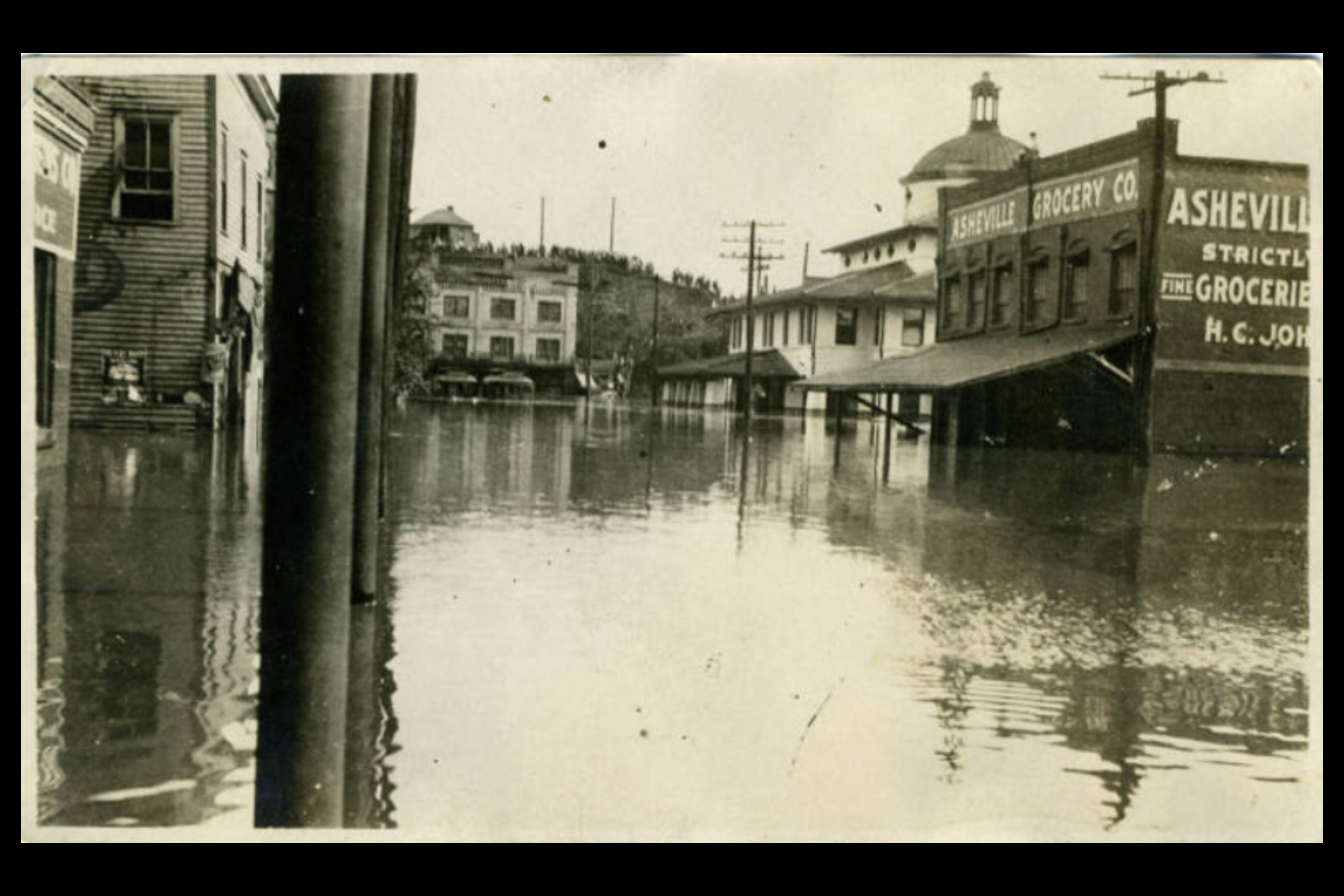
ASHEVILLE, N.C. (828newsNOW) — Asheville’s Flood of 1916 stands as the one by which all others are measured. The flooding, which happened when two tropical storms converged on Western North Carolina that summer, left 80 people dead and made a wasteland of the landscape.
According to the city of Asheville’s website, the French Broad River, usually about 380 feet wide, stretched 1,300 feet across. It crested at 21 feet, some 17 feet above flood stage. Though the rain had stopped on the Sunday morning of July 16, 1916, people were taken by surprise by the speed and volume of rising floodwaters, the website said. Many resorted to climbing into and clinging to trees during the deluge. Some of them saw friends and family members slip away when they couldn’t hold on any longer.
Since then, people have wondered, “Could it happen again?”
September 2024
When rain started falling Wednesday, Sept. 25, the historic Flood of 1916 wasn’t part of the discussion. But as the deluge continued and Hurricane Helene barreled toward the coast making a track toward WNC, it quickly became part of the conversation.
A Tropical Storm Watch quickly became a Tropical Storm Warning and numerous flood advisories were issued throughout the area.
Then came this statement Thursday from the National Weather Service, “A major rainfall event for the southern Appalachians and vicinity with the potential for widespread to catastrophic flash flooding is occurring.”
Weather officials said record flooding is possible when Hurricane Helene joins the party.
“This will be one of the most significant weather events to happen in the western portions of the area in the modern era. Record flooding is forecasted and has been compared to the floods of 1916 in the Asheville area,” the NWS statement said.
The impacts from this dual event are expected to be greater than when the remnants of Tropical Storm Fred pummeled the Haywood County area in August 2021 or when the remnants of Hurricanes Frances and Ivan swamped the mountains in 2004, the National Weather Service said.
“We plead with everyone that you take every single weather warning very seriously through the entirety of this event as impacts will be life-threatening and make sure to have multiple ways to receive the alerts. The protection of life and property is the overall mission of the National Weather Service, and we pledge to stand by the folks of the western Carolinas and northeast Georgia. We cannot stress the significance of this event enough. Heed all evacuation orders from your local Emergency Managers and go to a storm shelter if you do not feel safe at your current location.”
MORE COVERAGE
Some Buncombe residents urged to evacuate ahead of ‘catastrophic’ flooding
Hendersonville braces for possible catastrophic flooding
Hurricane Helene: Storm updates, shelter info & more
Emergency numbers, websites to keep handy
828 Road Report: WNC closures ahead of Hurricane Helene
‘Prepare and pray,’ Canton mayor says of coming storm
Asheville Greek Festival braving storm, celebration still on
Mission Health, Pardee announce storm-related closures of practices