Editor’s note: This story has been updated with additional records provided by the Housing Authority of the City of Asheville. It corrects the effective date of the 150% voucher payment standards to Dec. 1, 2024, and removes an incorrect statement that HACA’s Moving to Work authority allowed it to continue using a 150% standard without HUD approval. The story has also been updated to clarify which households are affected and how changes in housing assistance may affect tenants’ payments.
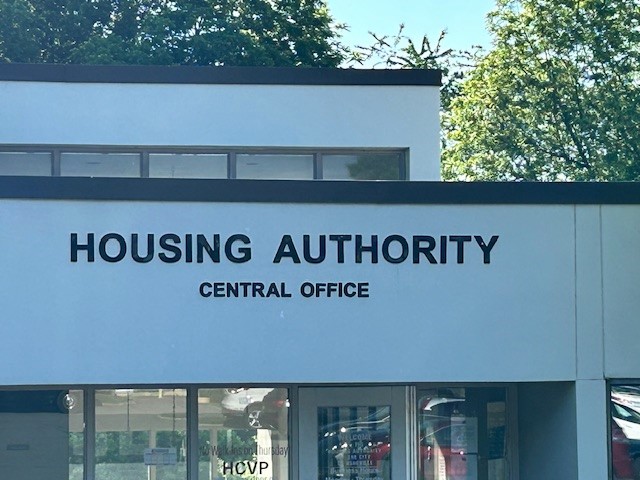
ASHEVILLE, N.C. (828newsNOW) — The Housing Authority of the City of Asheville is adjusting housing assistance payments for dozens of households after determining it had been using a higher voucher payment standard without required approval from the U.S. Department of Housing and Urban Development.
Additional records provided by HACA show the 150% Fair Market Rent payment standards took effect Dec. 1, 2024, earlier than the agency previously told 828newsNOW.
HUD formally denied HACA’s request for the 150% standard on March 19, 2025, saying the agency had not submitted all of the required supporting data.
About 85 households had received rent adjustment notices at the time of HACA’s latest response, according to the agency. HACA said the final number remains under review.
The changes do not affect every Housing Choice Voucher participant. HACA said affected households include those whose landlords requested annual rent increases, participants who transferred to another unit and those who moved into new units while the incorrect standards were being used.
Participants who moved into units after Oct. 6, 2025, are not affected by the erroneous calculations, according to HACA.
HACA President and CEO Ella Santos said the agency is not seeking repayment from tenants or landlords for assistance previously paid using the unauthorized standard. The adjustments apply to future assistance payments.
Records show how 150% standard took effect
Records provided by HACA after the initial story was published offer a more detailed timeline of how the higher payment standard was adopted while former President and CEO Monique Pierre led the agency.
In an Oct. 22, 2024, email to staff, Pierre said the 150% figure “is not a mistake” and said it was what HUD allowed because of the disaster.
The next day, HACA’s Board of Commissioners approved Resolution 2024-35. The resolution said HACA had HUD approval for payment standards at 120% of Fair Market Rent through its Moving to Work flexibility and said the standards could go as high as 150% if approved by HUD.
A payment standards chart included with the resolution set new amounts effective Dec. 1, 2024. Those amounts — including $1,929 for a studio, $2,268 for a two-bedroom unit and $3,849 for a four-bedroom — equal 150% of the 2025 Fair Market Rents listed on the chart.
The records also show an apparent discrepancy in HACA’s understanding of its authority at the time.
On Oct. 31, Pierre and then-board Chairman Tilman Jackson submitted an updated disaster waiver request to HUD stating HACA “currently has a payment standard of 150% of FMR” and that its existing waiver would expire in December 2024.
The agency asked HUD to extend the 150% standard through Dec. 31, 2025.
That language differs from the board resolution approved eight days earlier, which said the payment standard could go to 150% if HUD approved it.
HUD denied 150% request
HUD’s March 19, 2025, response shows the federal agency denied HACA’s request for the 150% exception payment standard.
HUD said housing authorities seeking disaster-related flexibility to establish exception payment standards were required to provide information including pre-disaster voucher lease-up and success rates, previous payment standards, the amount requested and justification for the exception.
HACA did not provide all of the required pre-disaster data, HUD said.
“Therefore, the request is denied,” the letter states.
HUD said existing regulations provided another avenue for housing authorities to establish exception payment standards between 110% and 120% of Fair Market Rent under certain circumstances.
The March letter was addressed to Pierre as HACA’s CEO, although she was no longer leading the agency when HUD issued its decision.
Former CEO disputes HACA’s account
Pierre’s attorney previously told 828newsNOW that the higher payment standard was proposed in response to the housing shortage caused by Tropical Storm Helene and that the change required and received approval from HACA’s Board of Commissioners.
The attorney also said HUD’s denial came months after Pierre’s departure and that HUD provided the agency with a path to seek approval after she left.
In the newly provided Oct. 22 email, Pierre told staff the 150% standard “is not a mistake” and said it was what HUD allowed because of the disaster.
The Oct. 31 waiver request also described HACA as already having a 150% payment standard and asked HUD to extend it through the end of 2025.
HUD’s subsequent response denied HACA’s request for the 150% exception payment standard, saying the agency had not provided all of the required supporting data.
828newsNOW has asked Pierre’s attorney for additional comment on the records provided by HACA.
What it means for tenants
HACA is now recalculating assistance using authorized payment standards.
Landlord Reade Walker previously told 828newsNOW that changes involving five households would reduce housing assistance payments by a combined $1,155 a month, or $13,860 a year.
A reduction in HACA’s assistance payment does not necessarily mean a tenant’s payment will increase by the same amount. HACA is asking affected landlords to consider reducing contract rents to help households remain in their homes. If the contract rent remains unchanged, however, the tenant’s share will increase.
HACA has said households facing increased rent burdens may also have options under the agency’s hardship policies.
The agency is not seeking repayment from landlords or tenants for assistance previously paid using the 150% standard, Santos said. HACA previously characterized those payments as overpayments; HUD’s March 19 letter does not make such a determination.
The adjustments apply to future housing assistance payments.