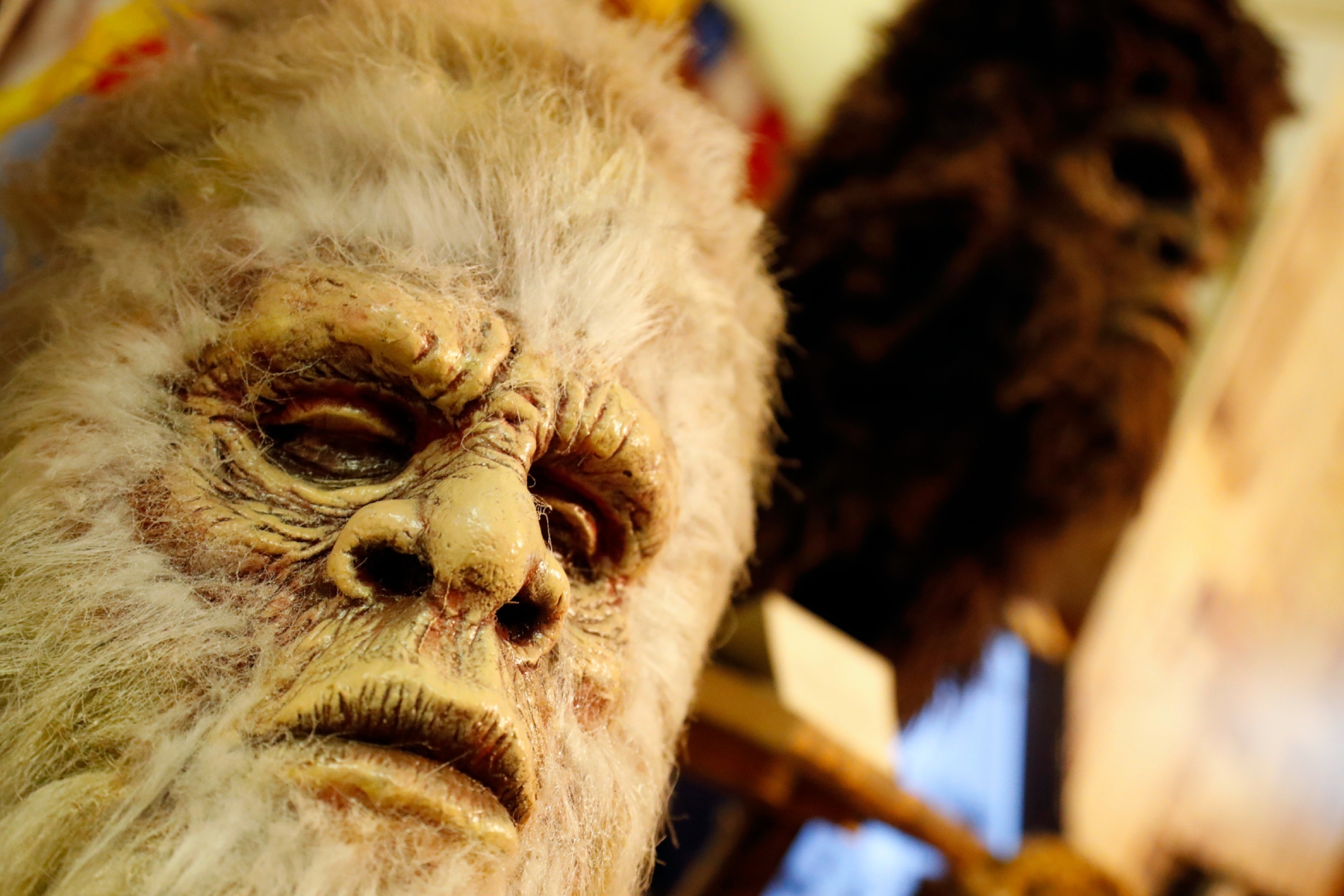
ASHEVILLE, N.C. (828newsNOW) — The FBI once tested hair suspected of belonging to Bigfoot. Federal wildlife officials have investigated mysterious footprints. And in one Western North Carolina town, the elusive creature was even proclaimed the official animal.
That’s quite a legacy for a creature whose existence has never been scientifically established.
For decades, stories of strange creatures, oversized footprints and unexplained encounters have emerged from the mountains of Western North Carolina, attracting amateur investigators, television crews and plenty of skeptics.
On Oct. 15, 2026, the U.S. Forest Service released three historical records related to Bigfoot, including a footprint investigation, an account of reported encounters and a newspaper clipping.
Although the documents concern events elsewhere in the country, Western North Carolina has a collection of Bigfoot stories of its own. Some have made newspaper headlines. Others have inspired organized searches, business ventures and even a festival.
Bigfoot in Asheville’s backyard
The Bigfoot Field Researchers Organization, a private group that collects reports of possible encounters, lists three reports from Buncombe County dating from 1986 to 2016.
In September 1986, a motorist reported a sighting near Carter Mountain shortly after sunset. Another account, dated November 1991, describes a childhood sighting on Black Mountain.
A more unusual report from June 2016 involved unexplained shaking of large trees about 15 miles southwest of Asheville.
The organization also lists reports from Haywood, Henderson, Burke, Avery and several other Western North Carolina counties.
None of the accounts establishes the existence of Bigfoot, but the reports offer a glimpse into the experiences that have kept the legend alive.
By 2016, reported encounters in the Asheville area had caught the attention of television producers.
In its Feb. 3, 2016, edition, Madison County’s News-Record and Sentinel reported that Animal Planet’s “Finding Bigfoot” was coming to Western North Carolina and looking for residents willing to share their stories at a town hall meeting.
Among the encounters mentioned in the article was a reported Henderson County sighting that had attracted media attention the previous summer.
The television series followed a team of researchers as they traveled in search of the legendary creature.
But people had been looking for Bigfoot in Western North Carolina long before the television cameras arrived.
Following the footprints
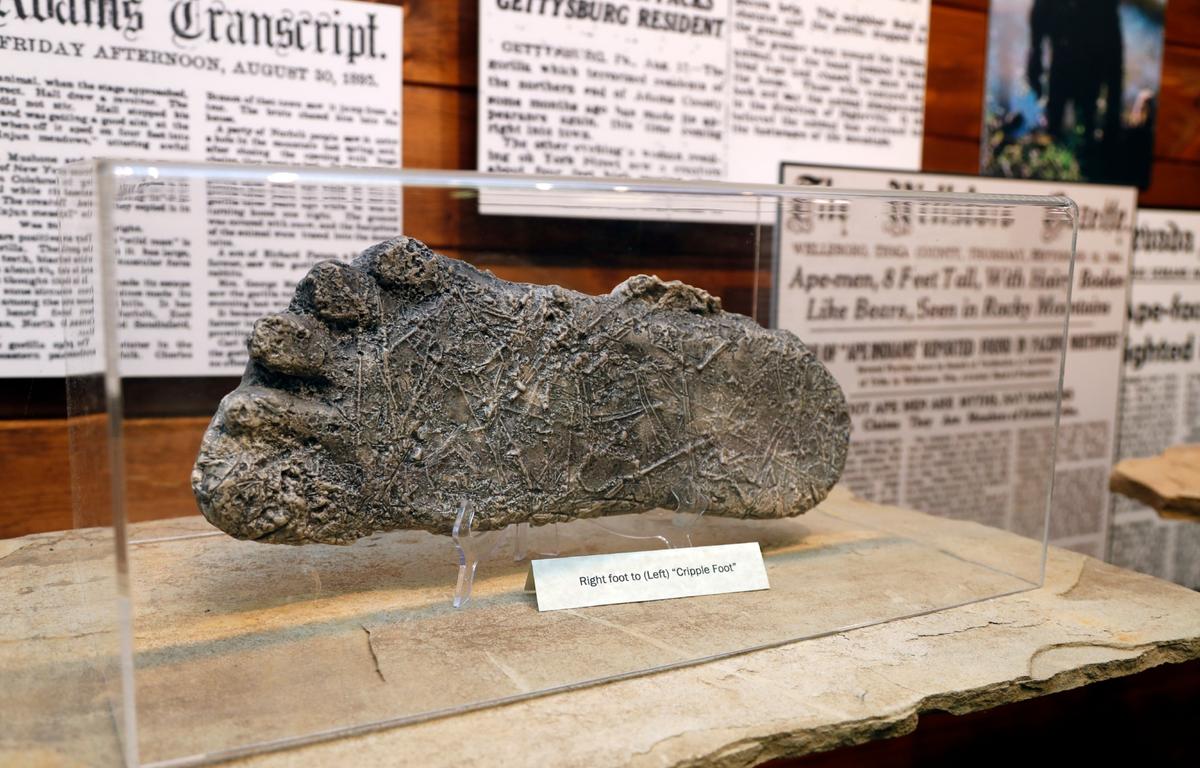
On June 23, 2010, The News-Herald in Morganton carried a front-page story under the headline “Bigfoot print ‘looks pretty valid.’”
Reports of sightings and possible evidence in Burke and Cleveland counties had drawn a team of Bigfoot researchers to the area. Among the items that caught their attention was a plaster cast of a footprint.
The researchers expressed interest in the print, though their assessment did not establish what had made it.
By 2017, McDowell County had its own organized group of Bigfoot hunters.
Bigfoot 911, founded by John Bruner of Marion, conducted searches and collected accounts from people who believed they had encountered something unusual in the woods.
In June 2017, The Herald-Sun in Durham published a story about the group under the headline “Seen a Sasquatch? Call Bigfoot 911 team.”
Two months later, the group made headlines again.
In August 2017, Bruner reported encountering a large, hair-covered creature during a search in a wooded area of McDowell County. His account attracted attention from newspapers across North Carolina, including the News & Record in Greensboro.
Bruner continued sharing his experiences with audiences around the region. In November 2017, The McDowell News covered a presentation he gave at Hickory’s Patrick Beaver Memorial Library, where adults and children gathered to hear about his group’s research.
A mountain town embraces Bigfoot
The search for Bigfoot also inspired a bit of entrepreneurship.
In September 2017, The News-Herald published a story about a Marion woman who developed a spray she claimed could attract the creature. Marketed as Bigfoot Juice, the product attracted media attention of its own.
A year later, Marion took its association with the legendary creature a step further.
In August 2018, newspapers across North Carolina reported that Marion had proclaimed Bigfoot its official animal. The largely ceremonial proclamation took effect Sept. 8, coinciding with a Bigfoot festival.
Bruner had approached local officials with the idea after learning that Whitehall, New York, had made a similar declaration.
In Marion, the legend had grown from reported encounters in the woods into a community celebration.
When the FBI got involved
Long before Bigfoot became a celebrated figure in Marion, a researcher persuaded the FBI to examine what he hoped might be physical evidence of the creature’s existence.
In 1976, Bigfoot researcher Peter Byrne contacted the FBI about a collection of about 15 unidentified hairs attached to a small piece of skin.
The FBI agreed to examine the sample as an exception to its usual laboratory policy.
The results, delivered in February 1977, offered a more ordinary explanation. The hairs came from a member of the deer family.
The FBI publicly released the correspondence and laboratory findings in 2019. The 22-page file remains available through the agency’s online records archive, known as The Vault.
The Forest Service records released in October 2026 offer another example of federal officials examining purported evidence.
One document details a 1982 investigation of unusual footprints in the Umatilla National Forest in the Pacific Northwest. A federal wildlife biologist concluded the tracks were not made by a large, two-legged creature, while a U.S. Border Patrol tracker suspected a hoax.
The other records concern reported encounters and mysterious footprints in Montana.
Neither the FBI nor the Forest Service records establish the existence of Bigfoot or document an encounter in the Asheville area.
A mystery that endures
Western North Carolina’s dense forests, secluded mountain hollows and rugged terrain provide a fitting backdrop for stories about a creature said to avoid human contact.
Scientists have yet to establish that Bigfoot exists. Decades of reported sightings, photographs, footprints and other purported evidence have failed to provide conclusive scientific proof.
Still, the absence of proof hasn’t stopped people from looking.
In October 1987, The News-Herald in Morganton published a column by Kelly Winters with a headline that posed a familiar question: “Is Bigfoot really out there?”
Nearly four decades later, Western North Carolina’s Bigfoot hunters are still looking for an answer.