ASHEVILLE, N.C. (828newsNOW) —
EDITOR’S NOTE: Everyone has a story — some more well-known than others. Across Western North Carolina, so much history is buried below the surface. Six feet under. With this series, we introduce you to some of the people who have left marks big and small on this special place we call home.
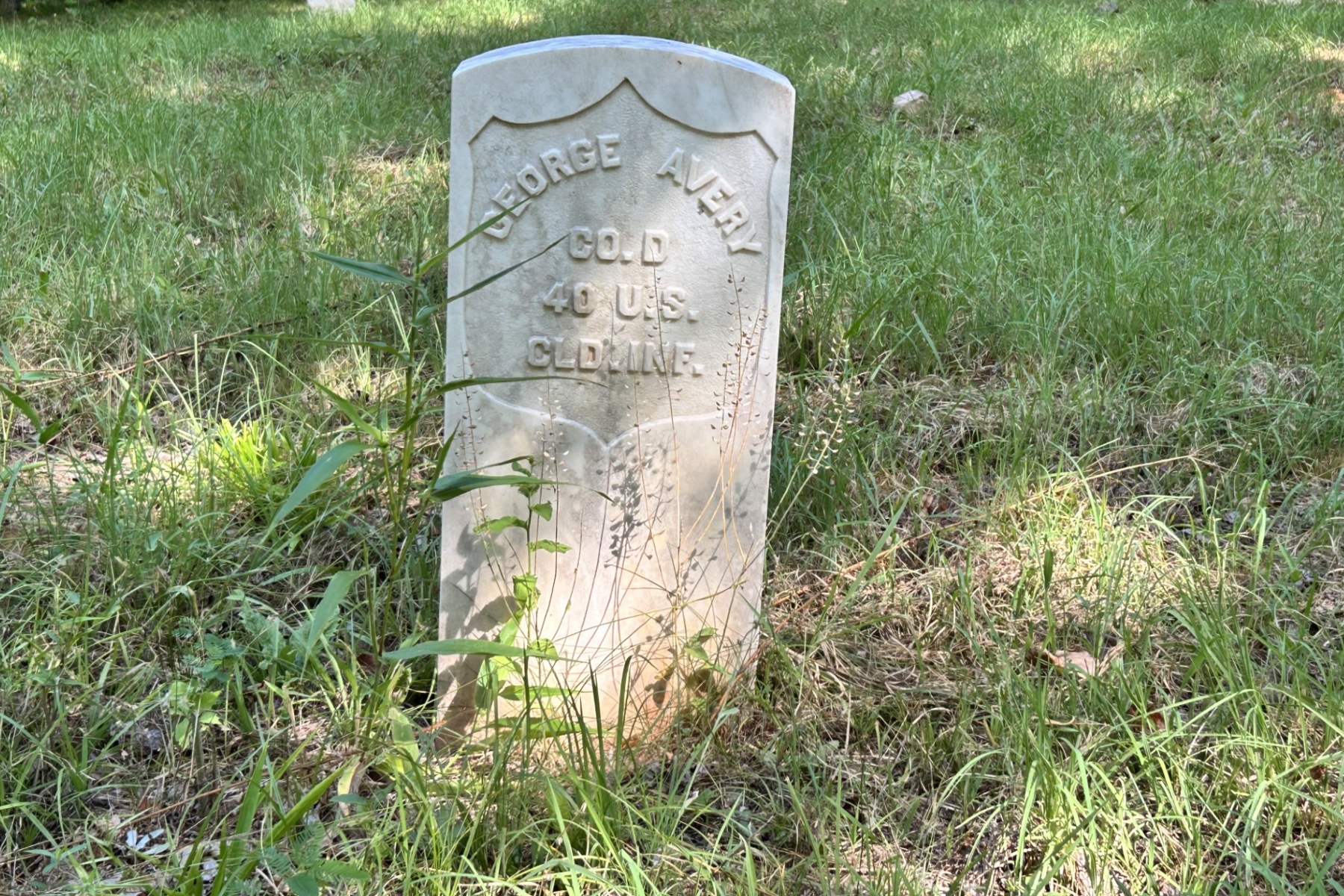
George Avery, 1844-1938, who is buried in South Asheville Cemetery, was once a slave and the cemetery’s first known caretaker.
—–

Tucked away at the end of Dalton Street beside St. John “A” Baptist Church is a small cemetery where most of the graves are marked by stones.
South Asheville Cemetery was founded in the early to mid-1800s for slaves of the Smith and McDowell families, according to the South Asheville Cemetery Association website. William Wallace McDowell (1823-1893), who lived in the Smith-McDowell House, made his slave George Avery caretaker of the 2-acre burial ground, the oldest public African-American cemetery in Western North Carolina.
According to McDowell family stories, McDowell freed Avery and several other men in April 1865 when he realized the Confederacy was going to fall. McDowell is said to have urged them to join the Union Army so they could claim pensions, according to the Asheville Museum of History. The family likely had little choice, however, as about this time Union General George Stoneman’s troops arrived in Asheville and liberated the enslaved population.
Avery, who was a 19-year-old blacksmith, joined Company D, 40th U.S. Colored Troops on April 29, 1865, in Greeneville, Tennessee, and signed his volunteer enlistment papers with an “X.”
The unit guarded railroads in East Tennessee for the rest of the war, according to the Historical Marker Database. Although Avery had enlisted for three years, he and the regiment were mustered out on April 25, 1866.

When Avery returned from the war, he resumed his job at the cemetery, digging graves at the cost of $1 if the family could afford it. He looked after the site until his death in 1938 at age 94.
African-American residents of South Asheville mostly attended two churches, St. John “A” Baptist and St. Mark A.M.E. Church, according to the South Asheville Cemetery Association website. Part of the cemetery was allotted for church congregants, but any African-American community member could be buried there for a nominal fee.
“Many of these people were buried in wicker baskets or pine coffins, their graves marked only by field stones or handmade crosses. Due to the settling of the ground and the array of unusual grave markers, the cemetery must be cleared by hand,” the website said.
South Asheville Cemetery was closed after the city of Asheville annexed South Asheville and Kenilworth, and the last person interred there was Robert C. Watkins, buried in 1943.

Nearly 2,000 graves have been identified at the cemetery, but Avery’s headstone is one of only 93 with names or dates identifying the people buried there.
The cemetery had no written plan or map. Avery tracked grave locations by memory, likely because he could not read or write, the museum’s website said. The earliest graves were marked with wooden planks that are long gone. But the stones that mark many of the graves are still there.
Avery’s land
It was said that when Avery returned from the war, the McDowells gave him land and lumber to build a house along with his job as caretaker of the South Asheville Cemetery.
But, according to the Buncombe County Register of Deeds Office, the first deed with Avery’s name was a transfer of property to him and Benjamin Ragsdil, Albert Rowley and Lazaines Clayton associated with the AME Zion Methodist Episcopal Church from William and Sarah McDowell in 1890. The property was to be “used as a Cemetery for Colored people.”
That same year, the McDowells transferred another piece of property to Avery for $120.
George Avery died in 1938 and was buried in the South Asheville Cemetery. His grave is marked with an upright military gravestone for his Civil War service.